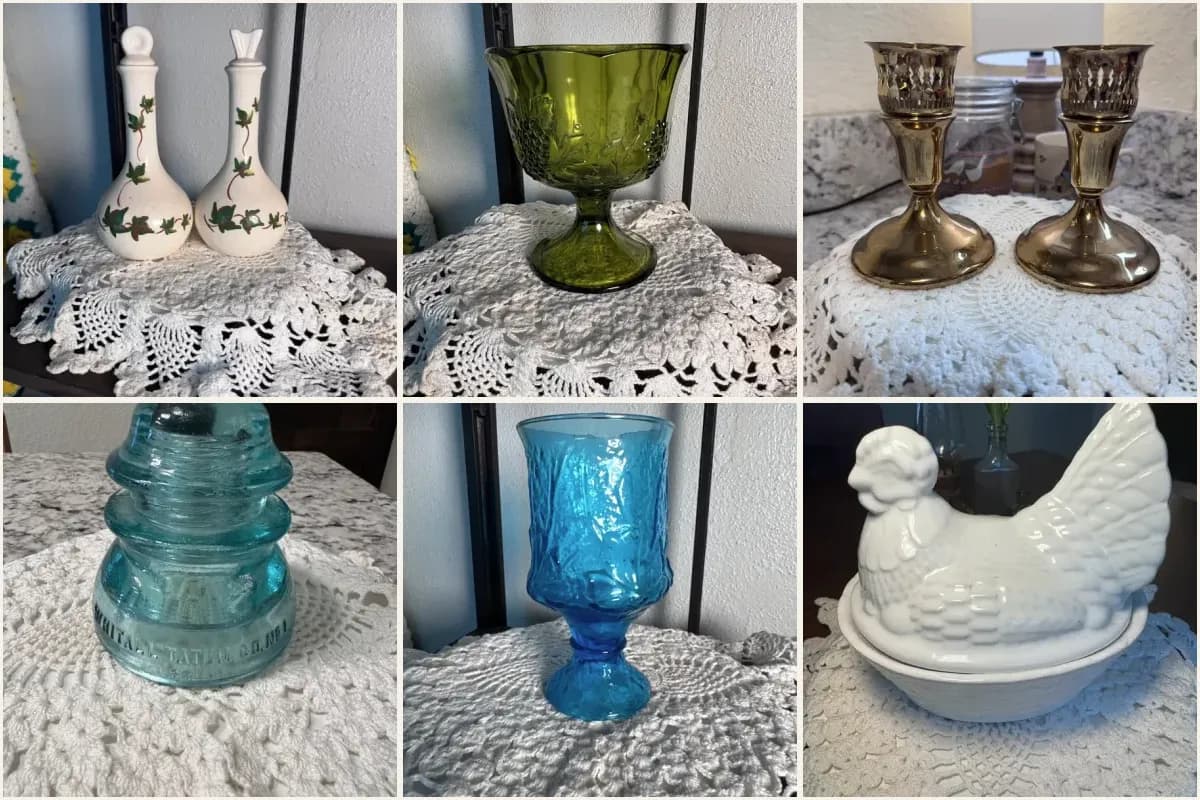
Glassware & Dishes
How to Buy Vintage Glassware and Dishes: What to Look For
The best vintage glassware and dishes are a pleasure to use and easy to mix into a modern table. The trick is knowing where damage hides. Rims, handles, and bases take the most wear, and small flaws can be hard to see in a photo.
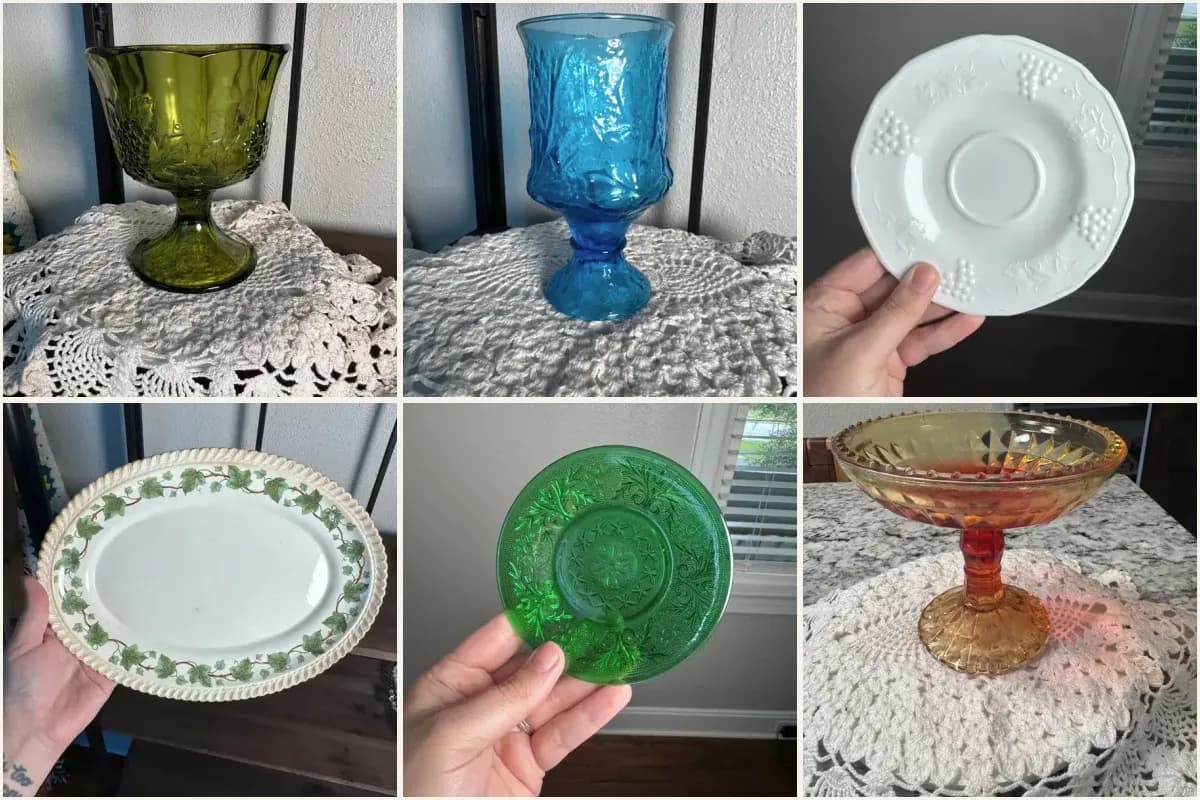
This guide covers what to look for, how to tell ordinary wear from damage, and when a chip is and is not a deal breaker. If you are new to buying secondhand online, our broader guide to buying vintage online covers the basics.
The Short Version
- Examine rims, handles, bases, and edges carefully. That is where most damage hides.
- Small manufacturing variations, like bubbles or mold seams, are different from later damage.
- Check whether a set is complete, or intentionally mismatched.
- Maker marks help identify a piece, but a missing mark does not make something worthless.
- Decide whether you are buying for everyday use, display, or collecting before you judge condition.
In this guide
- What should you look for when buying vintage glassware?
- What is the difference between normal wear and damage?
- Should vintage glassware be perfectly matched?
- How can you identify vintage glassware or dishes?
- Are old dishes safe to use?
- How should vintage glassware be shipped?
- Is a chip a deal breaker?
- Buying vintage tableware online: a checklist
- Frequently asked questions
What should you look for when buying vintage glassware?
Look closely at the rim, the base, and any handles or edges, then check the surface for cloudiness, scratches, and discoloration. Those areas show the most wear, and the damage that matters most.
- Chips. Follow the full rim and any raised pattern edges. Collectors often call very small rim chips “flea bites.”
- Cracks. Hairline cracks can be faint. Look for a thin line that catches the light, especially near handles and rims.
- Cloudiness. A hazy film may be mineral deposits that wash off, or etching from dishwashers that is permanent. Photos rarely show which, so ask.
- Scratches and utensil marks. Gray lines on plates are common on well-used dinnerware and are usually cosmetic.
- Discoloration. On ceramics, look for crazing (a fine web of cracks in the glaze) and brown staining.
- Repairs. Glue lines, filled chips, or retouched decoration should be disclosed.
- Base damage. A ring of fine scratches on the bottom is normal from years of sliding across shelves and tables. Chips on a foot or base are worth a closer look.
If a listing is missing a clear photo of the rim in good light, or the base straight on, it is reasonable to ask the seller for one.
What is the difference between normal wear and damage?
Normal wear is cosmetic and expected for a piece’s age, like light scratches or faint wear on the base. Damage affects how the piece can be used or how long it will last, like cracks, rim chips, and heavy crazing.
It also helps to separate wear from manufacturing variation. Older pressed and hand-finished glass can include small bubbles, seam lines from the mold, slight unevenness, or tiny inclusions. Those were part of how the piece was made and are generally not considered damage, although a good listing still describes them.
Usually normal
- Light surface scratches
- Faint wear on the base
- Mold seams on pressed glass
- Small bubbles or slight unevenness in older glass
- Gentle fading of decoration on well-used pieces
Usually damage
- Cracks of any size
- Chips on rims or drinking edges
- Heavy crazing or staining in the glaze
- Permanent cloudiness from etching
- Missing lids, stoppers, or matching parts
Should vintage glassware be perfectly matched?
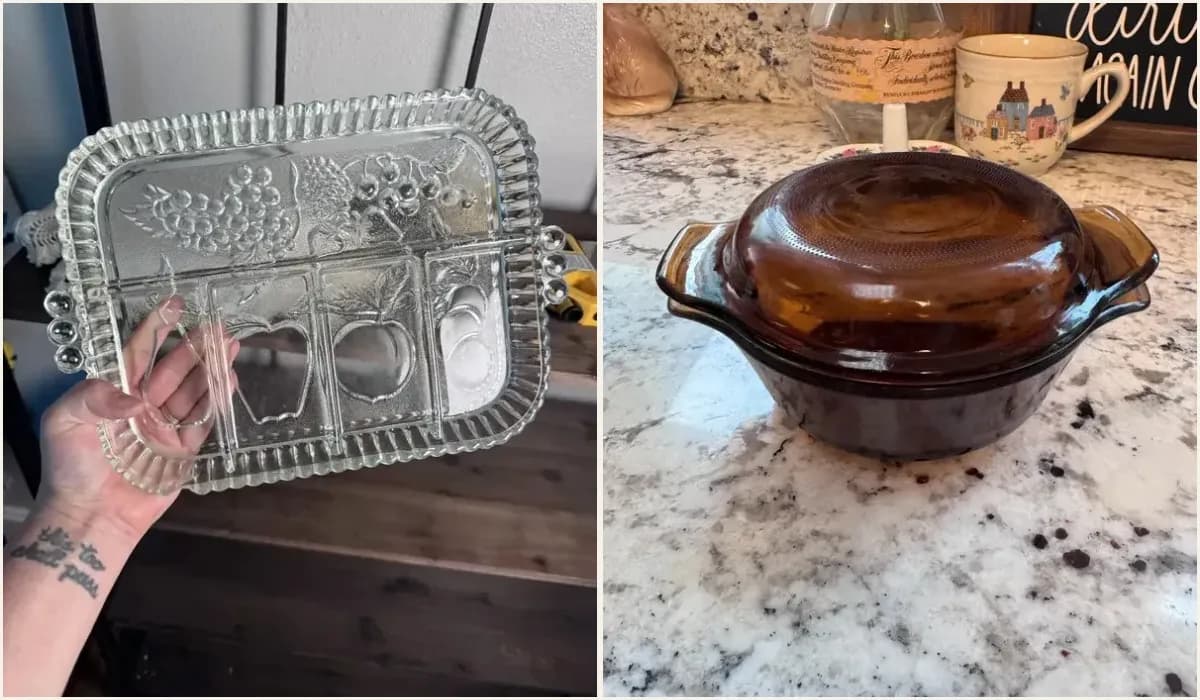
No, not unless you want it to be. Mixed sets can be intentional and very attractive, and they are often easier and more affordable to build than a full matching service.
When a listing says “set,” check how many pieces are included and whether they truly match. Some sets were sold together and share a pattern. Others are groups a seller has put together because they look good side by side. Both are fine, as long as the listing is clear.
A mixed table works best when the pieces share something: a color family, a similar era, or a common shape. Clear pressed glass mixes easily with colored glass, and floral china works well together when the colors echo each other. You can see how varied pieces sit together in our current glassware and dishes collection, alongside everyday stoneware in Home & Table.
How can you identify vintage glassware or dishes?
Start with any maker mark, label, or pattern name, then compare the shape, pattern, and construction with documented examples. No single feature proves a piece’s age, so treat each clue as part of a bigger picture.
- Maker marks. Stamps, backstamps, or molded marks on the base can identify the maker, and sometimes the pattern.
- Labels. Original paper or foil labels occasionally survive on glass.
- Pattern and shape. A distinctive pattern can often be matched to a maker’s line.
- Construction. Mold seams, pontil marks on hand-blown pieces, and how decoration was applied all hint at how a piece was made.
- References. Collector guides, maker catalogs, and pattern databases can help confirm what you are looking at.
A missing mark does not make a piece worthless. Plenty of well-made glassware was never marked, and paper labels were often washed off long ago. Recent listings in the shop name makers such as Anchor Hocking, Indiana Glass, Fire-King, Pfaltzgraff, and Lenox, which gives you a starting point for your own research.
Are old dishes safe to use?
Age alone does not tell you whether a dish is safe for food. Some older glazes and decorations were made with materials, such as lead, that are not considered food safe today, so it depends on the specific piece.
If you plan to eat or drink from a vintage piece, especially one with bright glazes, painted decoration, or metallic trim, research the specific maker and pattern. Home test kits and professional testing are available if you want more certainty. When in doubt, many people keep a piece for display, flowers, or dry storage rather than serving food.
Chipped or cracked pieces are also better kept for display, since damaged glaze is harder to clean and more likely to break.
How should vintage glassware be shipped?
Fragile pieces should be wrapped individually, padded on every side, and packed so they cannot shift or touch each other in the box.
- Each piece wrapped separately, with stemware protected at the stem as well as the bowl.
- Cushioning between the item and every wall of the box.
- Lids, stoppers, and inserts wrapped on their own.
- A sturdy outer box rather than a padded envelope.
Gathered Goods Co. packs pieces with care appropriate to each item and typically ships within 48 hours of purchase. If something arrives damaged, report it through the marketplace as soon as possible and keep all packaging. See Shipping & Returns for the details.
Is a chip a deal breaker?
Not always. Whether a chip matters depends on where it is, how big it is, how you plan to use the piece, how rare it is, the price, and whether the seller disclosed it.
- Location. A chip on the base or the underside of a foot matters far less than one on a drinking rim.
- Severity. A tiny flea bite is different from a chip you can catch a finger on.
- Intended use. Display pieces can tolerate flaws that everyday dishes cannot.
- Rarity. A hard-to-find piece may be worth buying with a small flaw.
- Price. A disclosed flaw should be reflected in the price.
- Disclosure. A clearly photographed, described flaw is a known quantity. An undisclosed one is a reason to contact the marketplace.
Some listings name a flaw right in the title, such as “chipped” or “factory glass flaw,” which lets you decide with full information.
Buying vintage tableware online: a checklist
Before you buy glassware or dishes online, confirm:
- Every photo reviewed, including the rim and the base
- Chips, cracks, crazing, and repairs checked
- Any cloudiness noted, and whether it may be permanent
- Set size and matching confirmed
- Maker mark or pattern name checked, if shown
- Intended use decided: everyday, display, or collecting
- Shipping cost and packing reviewed
- Marketplace return rules understood
Frequently asked questions
How can you tell if glassware is vintage?
Look for a combination of clues: maker marks, patterns, shapes, construction details, and wear consistent with age. Compare the piece with documented examples in collector guides or maker references. No single feature proves age, and reproductions exist, so take extra care with higher-priced pieces.
Are scratches normal on vintage glass?
Light surface scratches and base wear are normal on glass that has been used for years. Deep scratches on the main surface, or scratches combined with cloudiness, affect appearance more and should be reflected in the description and price.
Should you buy chipped vintage glassware?
It depends on the chip and your plans. A small, disclosed chip away from the rim may be fine for display or occasional use, especially on a rare piece at a fair price. Avoid rim chips on anything you plan to drink from.
What does “mismatched vintage china” mean?
It describes a table setting built from different patterns rather than one matching set. The pieces usually share a color, style, or era so they look intentional together.
How do you check vintage dishes for damage?
In person, look at each piece under good light, gently run a fingertip around the rim, and check the base, handles, and glaze for cracks, chips, and crazing. Online, look for close-up photos of those same areas and ask the seller for any view that is missing.
Can old dishes go in the dishwasher?
It is often safer not to. Dishwasher heat and detergent can fade decoration, wear away metallic trim, and permanently cloud some glass. Hand washing is the cautious choice for vintage pieces unless the maker states they are dishwasher safe.
Are maker marks important?
They are helpful but not essential. A mark can identify the maker or pattern and matters to collectors. Many good pieces were never marked, though, so the absence of a mark does not make something worthless.